



TREM receptor
Triggering receptors expressed on myeloid cells
The Triggering Receptor Expressed on Myeloid cells (TREM) family consists of several receptors expressed on the surface of myeloid cells, among which TREM-1 and TREM-2 are the most extensively studied. TREM-1 acts as an amplifier of immune responses, significantly enhancing the responses of macrophages and neutrophils to bacteria and fungi, and promoting the release of inflammatory cytokines such as TNF-α and IL-1β, thus playing a crucial role in acute inflammation and infection responses. Modulating TREM-1 signaling can alleviate the severity of sepsis. TREM-2 helps regulate immune responses by promoting the anti-inflammatory and repair functions of macrophages, maintaining tissue stability, particularly in neural tissues, where the function of TREM-2 is closely associated with slowing the progression of neurodegenerative diseases like Alzheimer’s disease.
The Triggering Receptor Expressed on Myeloid cells interacts with its adaptor protein DAP12 to initiate signaling pathways, including those involving the tyrosine kinase Syk, which in turn activates a variety of downstream cellular responses, including the production of inflammatory cytokines, enhancement of cell survival signals, and reorganization of the cytoskeleton. The Triggering Receptor Expressed on Myeloid cells and their adaptor proteins are not only crucial for understanding immune regulation mechanisms but also provide new targets for the study of various diseases, including inflammatory and neurodegenerative diseases[1].
TREM receptor Isoform Specific Products
All Product Categories
-
TREM receptor Inhibitors
(19)
View all products
-
TREM receptor Agonists
(8)
View all products
-
TREM receptor Antagonist
(1)
View all products
-
TREM receptor Activators
(2)
View all products
-
TREM receptor Modulator
(1)
View all products
-
TREM receptor Controls
(2)
View all products
-
TREM receptor Ligand
(1)
View all products
-
TREM receptor Related Products (37)
Related Products (37)

-
TREM receptor Isoform Comparison
- 1
- 2
-
Bortezomib
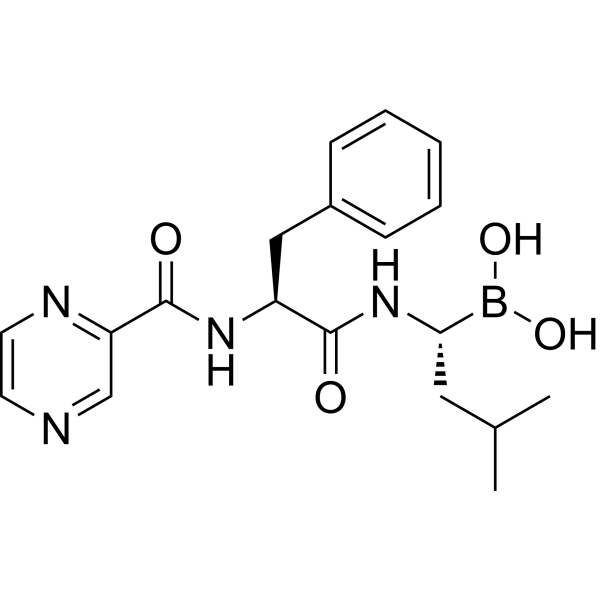 0 ImagesSynonyms: PS-341; LDP-341; NSC 681239Bortezomib (PS-341) is a reversible and selective proteasome inhibitor, and potently inhibits 20S proteasome (Ki=0.6 nM) by targeting a threonine residue. Bortezomib disrupts the cell cycle, induces apoptosis, and inhibits NF-κB. Bortezomib is the first proteasome inhibitor anticancer agent. Bortezomib can be used for the study of multiple myeloma (MM). Bortezomib effectively inhibits TREM2 expression in tumor-associated macrophages (TAMs).
-
IA9
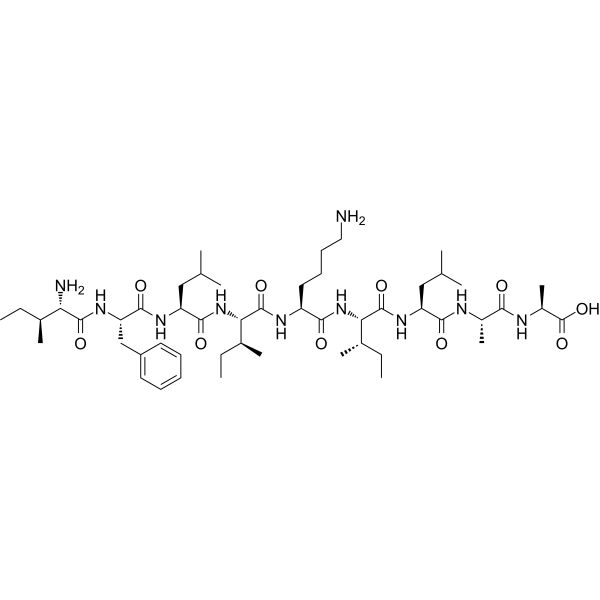 0 ImagesCat. No.: HY-P10136Synonyms: human TREM-2 182-190IA9 (human TREM-2 182-190) is a potent, CNS-penetrant TREM-2 inhibitor. IA9 can diminish the release of proinflammatory cytokines and suppress joint inflammation and damage in a Collagen (HY-P5003)-induced arthritis (CIA) mouse model. IA9 can be used for neuroinflammation PET imaging. IA9 can be used for Rheumatoid arthritis (RA) and neuroinflammation research.
-
Nangibotide TFA
 0 ImagesCat. No.: HY-P3211APurity: 99.36%Synonyms: LR12 TFANangibotide TFA (LR12 TFA) is a synthetic peptide and TREM-1 receptor inhibitor. Nangibotide TFA inhibits NF-κB and NLRP3 inflammasome activation and reduces the release of pro-inflammatory factors (such as IL-1β, IL-8). Nangibotide TFA inhibits Apoptosis. Nangibotide TFA reduces excessive inflammatory responses and protects tissues (liver, lung) from damage. Nangibotide TFA can be used in the researches for myocardial ischemia-reperfusion injury, septic shock, acute lung injury, osteoarthritis, and acute liver failure.
-
AL002
 0 ImagesCat. No.: HY-P991220AL002 is a humanized monoclonal IgG1 antibody and a blood-brain barrier-permeable TREM2 modulator. AL002 binds to TREM2 on the surface of microglia, promotes TREM2 clustering and the formation of the TREM2-DAP12 complex, activates the TREM2 signaling pathway and PI3K cascade, and induces TREM2 internalization and degradation. AL002 is applicable to research related to Alzheimer's disease.
-
DNL-919 (ATV)
 0 ImagesCat. No.: HY-P992516DNL-919 ATV is a brain-penetrant TREM2 agonist. DNL-919 ATV induces responsive microglial cell state changes and modulates microglial biomarkers. DNL-919 ATV can be used for the research of Alzheimer's disease.
-
Nangibotide
 0 ImagesSynonyms: LR12Nangibotide (LR12) is a synthetic peptide and TREM-1 receptor inhibitor. Nangibotide inhibits NF-κB and NLRP3 inflammasome activation and reduces the release of pro-inflammatory factors (such as IL-1β, IL-8). Nangibotide inhibits Apoptosis. Nangibotide reduces excessive inflammatory responses and protects tissues (liver, lung) from damage. Nangibotide can be used in the researches for myocardial ischemia-reperfusion injury, septic shock, acute lung injury, osteoarthritis, and acute liver failure.
-
Iluzanebart
 0 ImagesSynonyms: VGL101Iluzanebart is a human monoclonal IgG1 antibody and is the agonist antibody for human TREM2 (hTREM2). Iluzanebart improves the survival and function of microglia by activating the TREM2 signaling pathway to compensate for the loss of CSF1R function. Iluzanebart can be used for research of adult-onset leukoencephalopathy associated with CSF1R (colony stimulating factor 1 receptor) (CSF1R-ALSP).
-
TREM2 agonist-5
 0 ImagesTREM2 agonist-5 is the microglial lipid-sensing receptor (TREM2) agonist with a Kd of 71.36 μM. TREM2 agonist-5 is a racemic structural analog of the TREM2 agonist VG-3927 and exhibits superior microglial phagocytosis and activates TREM2 signaling in HEK293-hTREM2/DAP12 cells. TREM2 agonist-5 displays a superior in vitro pharmacokinetic profile to VG-3927. TREM2 agonist-5 can used for the study of Alzheimer’s disease.
-
Nangibotide scrambled peptide
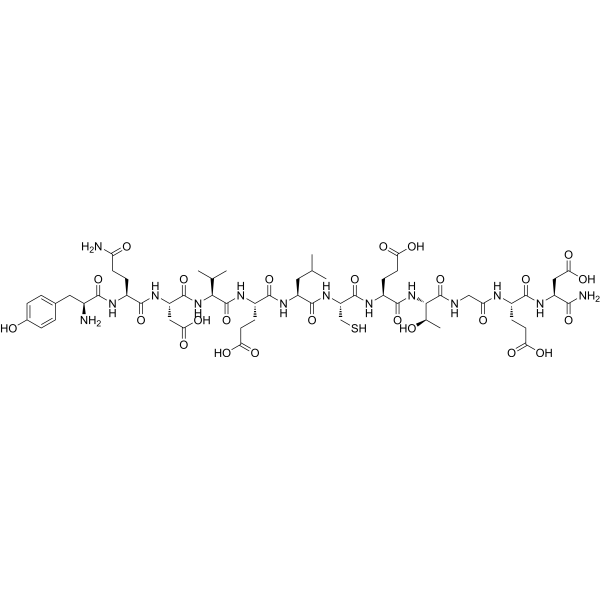 0 ImagesCat. No.: HY-P3211BPurity: 99.90%Synonyms: LR12-scrNangibotide scrambled peptide (LR12-scr) is a scrambled control peptide composed of the same amino acids from LR12 (Nangibotide; HY-P3211) but in a random sequence (YQDVELCETGED).
-
Bortezomib (Standard)
 0 ImagesSynonyms: PS-341 (Standard); LDP-341 (Standard); NSC 681239 (Standard)Bortezomib (Standard) is the analytical standard of Bortezomib. This product is intended for research and analytical applications. Bortezomib (PS-341) is a reversible and selective proteasome inhibitor, and potently inhibits 20S proteasome (Ki=0.6 nM) by targeting a threonine residue. Bortezomib disrupts the cell cycle, induces apoptosis, and inhibits NF-κB. Bortezomib is the first proteasome inhibitor anticancer agent. Bortezomib can be used for the study of multiple myeloma (MM). Bortezomib effectively inhibits TREM2 expression in tumor-associated macrophages (TAMs).
-
IA9 TFA
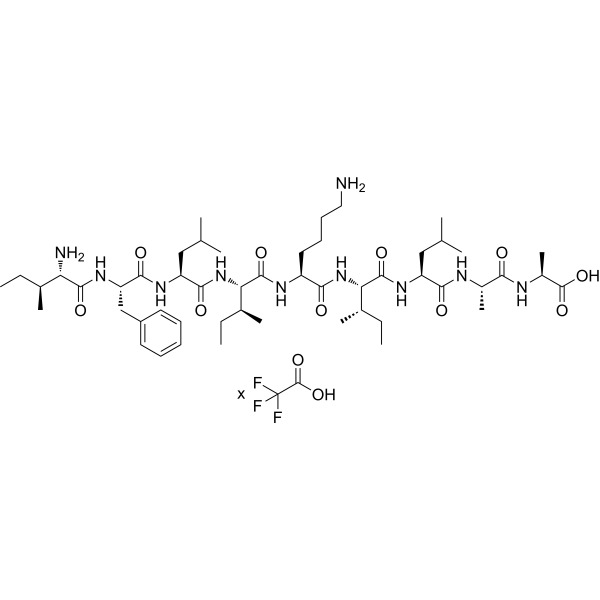 0 ImagesCat. No.: HY-P10136APurity: 98.90%Synonyms: human TREM-2 182-190 TFAIA9 TFA (human TREM-2 182-190 TFA) is a potent, CNS-penetrant TREM-2 inhibitor. IA9 TFA can diminish the release of proinflammatory cytokines and suppress joint inflammation and damage in a Collagen (HY-P5003)-induced arthritis (CIA) mouse model. IA9 TFA can be used for neuroinflammation PET imaging. IA9 TFA can be used for Rheumatoid arthritis (RA) and neuroinflammation research.
-
TREM-1 inhibitory peptide GF9
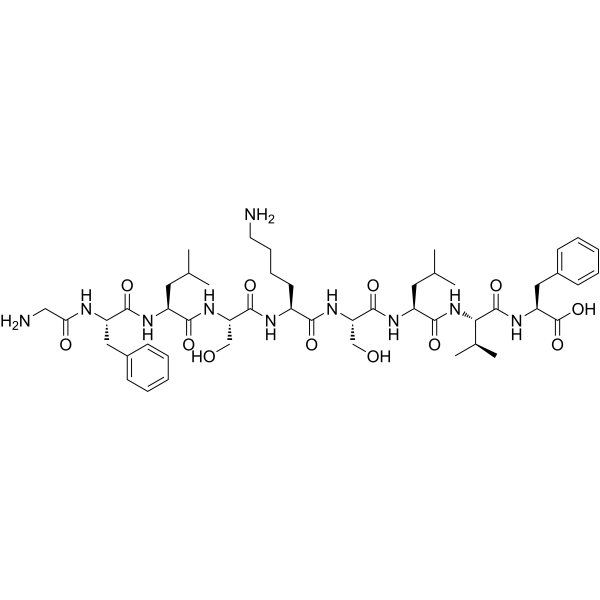 0 ImagesSynonyms: Human TREM-1(213-221)TREM-1 inhibitory peptide GF9 (Human TREM-1 (213-221)) is a TREM-1 inhibitor. TREM-1 inhibitory peptide GF9 blocks the TREM-1 signaling pathway via a ligand-independent mechanism, spontaneously inserts into the cell membrane to dissociate TREM-1 from DAP-12, and functions through the Signaling Chain Homooligomerization (SCHOOL) model. TREM-1 inhibitory peptide GF9 reduces the levels of TNFα, IL-1β, IL-6, and M-CSF. TREM-1 inhibitory peptide GF9 inhibits tumor growth, prolongs the survival of mice with pancreatic cancer models, ameliorates collagen-induced arthritis, and exerts protective effects on bone and cartilage simultaneously. TREM-1 inhibitory peptide GF9 can be used in research related to arthritis, pancreatic cancer, retinopathy, alcoholic liver disease, and liver cancer.
-
TREM2 agonist-3
 0 ImagesCat. No.: HY-174369Purity: 99.39%TREM2 agonist-3 (Compound 4i) is a TREM2 agonist with a KD value of 19.0 µM. The KD value of TREM2 agonist-3 for TREM1 is 39.8 µM. TREM2 agonist-3 induces an increase in phosphorylated SYK levels. TREM2 agonist-3 can be used in the research of neurodegenerative diseases and other diseases associated with TREM2 dysfunction.
-
PY159
 0 ImagesCat. No.: HY-P990650Purity: 98.44%PY159 is a humanized antibody targeting TREM1/CD354. PY159 reprograms immunosuppressive intratumoral myeloid cells towards an inflammatory, anti-tumor phenotype, promotes anti-tumor immune responses, upregulates monocyte activation markers, and induces proinflammatory cytokines. PY159 can be used for the research of platinum-resistant ovarian cancer, advanced solid tumors, and advanced refractory solid tumors.
-
PY314
 0 ImagesCat. No.: HY-P990651PY314 is a humanized antibody targeting TREM2. PY314 binds TREM2 on tumor-associated macrophages, depletes TREM2-high tumor-associated macrophages, reduces pro-tumorigenic M2 macrophage infiltration, increases CD8+ T cell, NK cell, and M1 macrophage infiltration, creates a proinflammatory tumor microenvironment, and promotes antitumor immune responseS. PY314 can be used for the research of platinum-resistant ovarian cancer, advanced solid tumors, breast cancer, and advanced refractory solid tumors.
-
VHB937
 0 ImagesCat. No.: HY-P991734Purity: 99.65%VHB937 is a potent and selective TREM2 agonist, a human monoclonal antibody, with sub-nanomolar affinity. VHB937 enhances TREM2 surface expression and downstream signaling, such as Syk phosphorylation and calcium mobilization. VHB937 exhibits robust neuroprotective effects in vivo, significantly reducing pathology and pro-inflammatory markers across a broad range of animal models of neuroinflammation and neurodegeneration. VHB937 can be used for neurodegenerative diseases research.
-
TREM2 agonist-4
 0 ImagesCat. No.: HY-174378Purity: 99.81%TREM2 agonist-4 (Compound 4a) is a TREM2 agonist with a Kd value of 45.9 μM. TREM2 agonist-4 can activate downstream signaling pathways of TREM2 and enhance the phagocytic function of microglia. TREM2 agonist-4 can be used in the research of neurodegenerative diseases such as Alzheimer's disease.
-
EOS006215
 0 ImagesCat. No.: HY-P991621Purity: 98.47%Synonyms: EOS-215EOS006215 (EOS-215) is a humanized monoclonal antibody targeting TREM-2. EOS006215 competes with TREM2 ligands, prevents TREM2 multimerization, and blocks downstream signaling. EOS006215 inhibits efferocytosis, reprograms transcriptomic profiles of monocyte-derived macrophages, alters metabolism and immune response genes, and increases pro-inflammatory marker secretion. EOS006215 reduces metastasis burden, delays tumor growth, and reprograms the tumor microenvironment to overcome anti-PD-1 resistance. EOS006215 can be used for the research of triple negative breast cancer and colorectal cancer.
-
LR-17
 0 ImagesCat. No.: HY-P11077CAS No.: 1256099-50-9Synonyms: TLT-1 (94-110)LR-17 (TLT-1 (94-110)), a 17-aa peptide, is a TREM-1 inhibitor. LR-17 shows anti-inflammatory effects that can reduce the secretion of pro-inflammatory cytokines induced by Lipopolysaccharides (HY-D1056) (LPS). LR-17 can be used for the study of sepsis.
- 1
- 2



